
Choosing the right material is one of the most important decisions when manufacturing an outdoor sign. The material affects not only the appearance of the finished sign, but also its durability, weight, maintenance requirements, cost, and performance in different weather conditions.
So, what is the best material for outdoor signs?
There is no single material that is best for every project. Aluminum, stainless steel, aluminum composite material (ACM), and acrylic all have different strengths. The right choice depends on the sign type, installation environment, desired appearance, expected service life, and budget.
This guide explains the most common outdoor sign materials, how they perform outdoors, and what to consider before choosing a material for your project.
Materials Commonly Used for Outdoor Signs
The most common signage materials for outdoor commercial applications include aluminum, stainless steel, ACM, and acrylic.
Each material serves a different purpose.
| Material | Best For | Main Advantages | Key Consideration |
|---|---|---|---|
| Aluminum | General outdoor signage | Lightweight, corrosion resistant, easy to fabricate | Finish and thickness affect performance |
| Stainless Steel | Premium and architectural signs | Strong, durable, premium appearance | Heavier and generally more expensive |
| ACM | Large flat sign panels | Lightweight, economical, rigid | Better suited to panel applications |
| Acrylic | Illuminated and dimensional signs | Excellent light transmission, versatile appearance | Application and outdoor specification matter |
This means choosing outdoor signage materials should not simply be a question of which material is strongest.
Instead, the better question is: Which material provides the right balance of durability, appearance, fabrication, and cost for this particular sign?
Choosing Material for Different Outdoor Signs Types
The best material for outdoor sign applications depends on what the sign needs to accomplish.
Aluminum: Best for Lightweight General Outdoor Signs
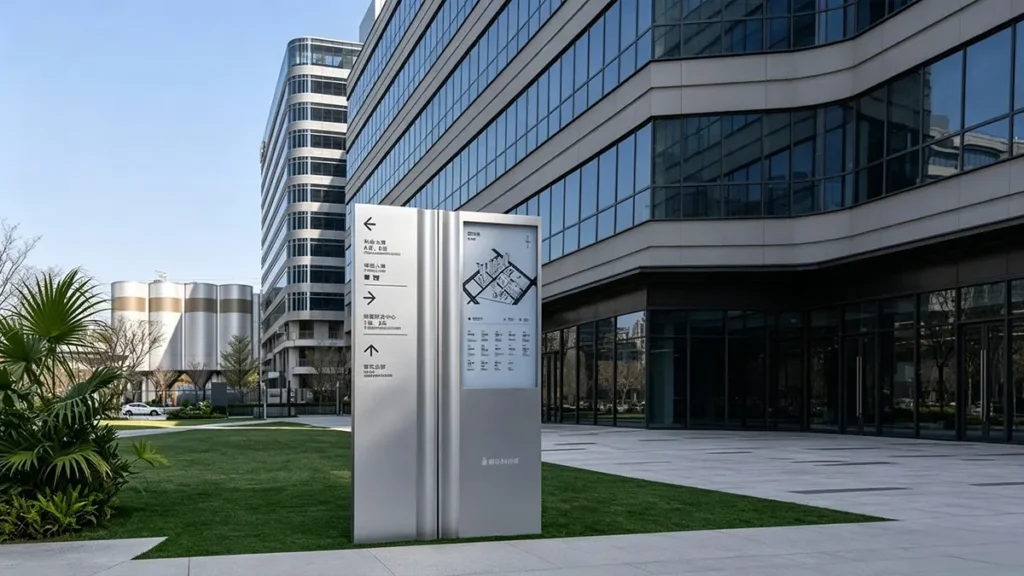
Aluminum is one of the most widely used materials for exterior signage because it combines low weight, corrosion resistance, strength, and fabrication flexibility.
It is particularly suitable for:
- Commercial building signs
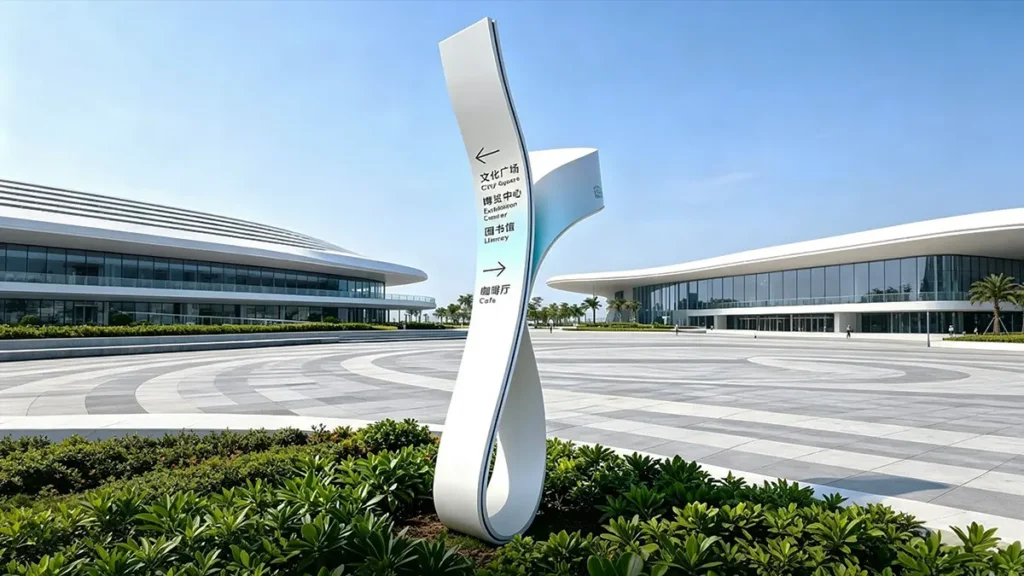
- Directional signs
- Wayfinding systems
- Flat panel signs
- Pylon and monument sign components
- Custom metal signage
- Sign cabinets and fabricated letters
Aluminum can also accept different surface treatments and finishes, making it suitable for projects where both performance and appearance matter.
The Aluminum Association notes that aluminum is widely used in building and construction because of its durability, corrosion resistance, strength-to-weight ratio, and design flexibility.
For many general-purpose outdoor sign materials, aluminum provides one of the best combinations of weight, durability, and manufacturing flexibility.
Stainless Steel: Best for Premium and Architectural Signage
Stainless steel is often selected when appearance, strength, and long-term durability are major priorities.
It is commonly used for:
- Architectural signage
- Corporate building signs
- Hotel signage
- Premium retail signage
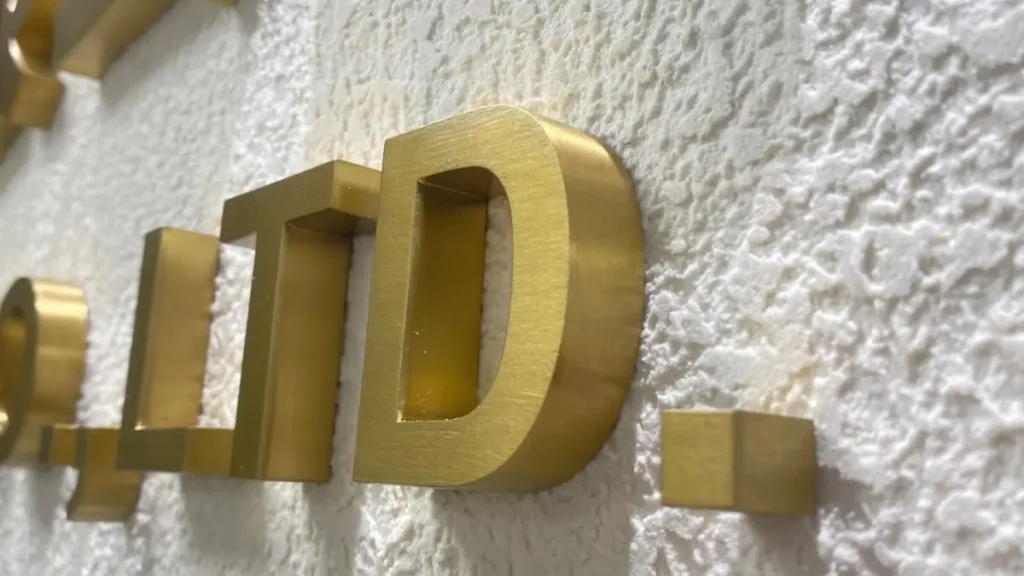
- Stainless steel letters
- Dimensional metal logos
- Brushed or polished metal signs
One of the biggest advantages of stainless steel is its combination of strength and corrosion resistance. It is also available in finishes such as brushed, satin, polished, and painted surfaces.
For architectural applications, stainless steel is widely used for exterior building elements because of its durability, corrosion resistance, and range of surface finishes.
For projects where a premium metallic appearance is important, stainless steel can be an excellent choice among exterior sign materials.
ACM: Best for Large, Lightweight Sign Panels
ACM, or aluminum composite material, consists of aluminum skins bonded to a lightweight core.
It is frequently used for:
- Large sign panels
- Commercial building graphics
- Directional systems
- Pylon sign panels
- Wall-mounted signage
- Retail branding panels
One major advantage of ACM is its combination of low weight and panel rigidity.
For large-format signs, reducing weight can simplify handling, transportation, mounting, and installation.
However, ACM should not automatically be treated as a replacement for solid aluminum or stainless steel in every application. The right construction depends on the size, structural requirements, mounting method, environment, and desired finish.
Acrylic: Best for Illuminated and Dimensional Signs
Acrylic is particularly useful when the sign needs illumination, color, transparency, or a clean dimensional appearance.
Common applications include:
- Front-lit channel letters
- Backlit letters
- Edge-lit signs
- Dimensional logos
- Illuminated storefront signage
- Decorative brand signage
Acrylic can transmit and diffuse light effectively, which is why it is frequently combined with LED lighting.
When selecting acrylic outdoor signs, the specific acrylic grade, thickness, finish, construction, and installation environment should all be considered.
What Are the Best Materials for Different Outdoor Environments?
There is no universal answer because environmental conditions can change the requirements for exterior sign materials.
Coastal Areas
Coastal locations expose signs to salt and moisture, increasing the importance of corrosion resistance.
Stainless steel can be a strong option for premium applications, while appropriately specified and finished aluminum can also be suitable for many projects.
For particularly demanding marine environments, material grade, finish, fasteners, isolation between dissimilar metals, and fabrication details should all be reviewed.
High-UV Locations
For locations with strong sunlight, consider:
- UV-resistant finishes
- Appropriate paints
- Outdoor-rated acrylic
- Durable surface treatments
- Proper graphic materials
The base material alone does not determine how well a sign will retain its appearance.
Rainy or Humid Environments
For wet environments, good enclosure and fabrication design are as important as material selection.
A weather-resistant sign should be designed to prevent unnecessary water accumulation and protect seams, electrical components, and vulnerable connections.
How Do You Choose the Right Outdoor Sign Material?
Instead of asking only which material is the strongest, consider these five questions.
1. Where Will the Sign Be Installed?
Is it:
- Indoors?
- Outdoors?
- Near the coast?
- In a high-UV environment?
- In a humid or rainy location?
- In an industrial environment?
The environment is one of the most important factors affecting material selection.
2. What Type of Sign Is It?
Different sign structures require different materials.
A flat panel sign has different requirements from:
- Channel letters
- Dimensional letters
- Pylon signs
- Architectural logos
- Wayfinding systems
- Illuminated signs
3. What Appearance Do You Need?
Consider whether the project requires:
- Natural metal
- Brushed stainless steel
- Mirror polish
- Painted color
- Matte finish
- Gloss finish
- Illuminated acrylic
Appearance requirements can significantly influence the choice of material.
4. How Long Should the Sign Last?
If the sign is temporary, a lightweight and economical solution may be sufficient.
For permanent architectural or corporate signage, the priority may shift toward long-term durability, corrosion resistance, finish stability, and ease of maintenance.
5. What Is the Overall Project Budget?
The lowest material cost does not always mean the lowest total project cost.
A material that is slightly more expensive may provide:
- Longer service life
- Lower maintenance
- Better appearance retention
- Easier fabrication
- Better structural performance
The goal should be to select the right material for the application, rather than simply the cheapest material.
Aluminum vs. Stainless Steel vs. ACM vs. Acrylic
A quick comparison can help narrow down the options:
| Material | Durability | Weight | Appearance | Typical Applications |
|---|---|---|---|---|
| Aluminum | High | Light | Versatile | Outdoor panels, letters, cabinets |
| Stainless Steel | Very high | Heavy | Premium | Architectural and corporate signage |
| ACM | Good | Very light | Flat / modern | Large panels and commercial graphics |
| Acrylic | Good when properly specified | Light | Colorful / illuminated | Channel letters and illuminated signs |
There is no universal winner.
In general, aluminum is a practical choice for many outdoor signs because of its balance of weight, durability, and fabrication flexibility. Stainless steel is better suited to premium architectural applications, while ACM works well for large lightweight panels. Acrylic is often the preferred material for illuminated dimensional signage.
FAQ
1. What is the best material for outdoor signs?
There is no single best material for every project. Aluminum is a strong all-around choice for many outdoor applications, while stainless steel is well suited to premium architectural signage, ACM to large lightweight panels, and acrylic to illuminated signs.
2. Is aluminum good for outdoor signs?
Yes. Aluminum is lightweight, corrosion resistant, easy to fabricate, and suitable for many commercial outdoor applications. The specific alloy, thickness, surface finish, and fabrication method should be selected according to the project requirements.
3. Is stainless steel good for outdoor signage?
Yes. Stainless steel is widely used for exterior architectural applications because of its strength, corrosion resistance, durability, and range of surface finishes.
4. What is the most durable material for outdoor signs?
Stainless steel can provide excellent long-term durability, particularly in applications where strength and corrosion resistance are important. However, the overall durability of a sign also depends on the finish, fabrication, installation, and environment.
5. Is ACM good for outdoor signs?
ACM can be a good choice for large, lightweight sign panels and commercial graphics. Its suitability depends on the panel construction, mounting method, environmental exposure, and required service life.