
Aluminum signs are widely used in commercial buildings, retail environments, outdoor signage, and wayfinding systems. Their lightweight structure, fabrication flexibility, and range of available finishes make them suitable for many commercial signage projects.
However, selecting the right aluminum sign involves more than choosing a panel. Material type, thickness, surface finish, installation requirements, and environmental conditions all affect the final result.
This guide explains the main types of aluminum signs, their materials and finishes, manufacturing processes, and key considerations for commercial signage professionals planning custom projects.
1. What Are Aluminum Signs?
Aluminum signs are signage products made from aluminum sheets, fabricated aluminum components, or aluminum composite panels (ACM). They can be flat, formed, printed, painted, or assembled into custom structures for indoor and outdoor applications.
Two common material options are:
- Solid aluminum sheets: Single-layer metal panels that can be cut, drilled, bent, welded, and finished. They are often used for durable commercial signs, building identification, and fabricated signage.
- Aluminum composite panels (ACM): Panels consisting of two thin aluminum sheets bonded to a non-aluminum core. Their relatively low weight and flat surface make them suitable for architectural panels, fascia signs, and large-format displays.
The appropriate material depends on the sign’s dimensions, structural requirements, installation method, appearance, and operating environment.
2. Why Choose Aluminum for Commercial Signage?
Aluminum offers several practical advantages for commercial sign projects.
- Lightweight construction: Compared with many solid metal alternatives, aluminum can reduce sign weight and simplify handling, mounting, and installation, depending on the design.
- Corrosion resistance: Aluminum naturally forms a protective oxide layer. Suitable coatings and finishes can provide additional protection in outdoor environments.
- Fabrication flexibility: Aluminum can be cut, routed, bent, welded, painted, and printed to accommodate different sign shapes and designs.
- Design versatility: A range of colors, textures, and finishes allows aluminum signage to align with architectural styles and brand standards.
- Maintenance considerations: Properly specified and finished aluminum signs can be relatively easy to maintain, although cleaning and inspection requirements depend on the environment and finish.
For outdoor projects, material selection should account for moisture, UV exposure, temperature changes, pollution, and the expected maintenance schedule. No single aluminum specification is suitable for every application.
3. Types of Aluminum Signs, Materials, and Applications
Types of Aluminum Signs
Aluminum signs are available in various styles and structures to meet the requirements of commercial buildings, retail environments, and outdoor signage projects. Depending on the design, fabrication method, and application, common types include:
- Flat Aluminum Panel Signs: Simple, flat panels featuring printed graphics, lettering, or painted designs. Commonly used for building identification, informational displays, safety signs, and directional signage.
- Custom Fabricated Aluminum Signs: Made using cutting, bending, welding, and forming processes to create custom shapes, dimensional structures, and distinctive designs for commercial and architectural applications.
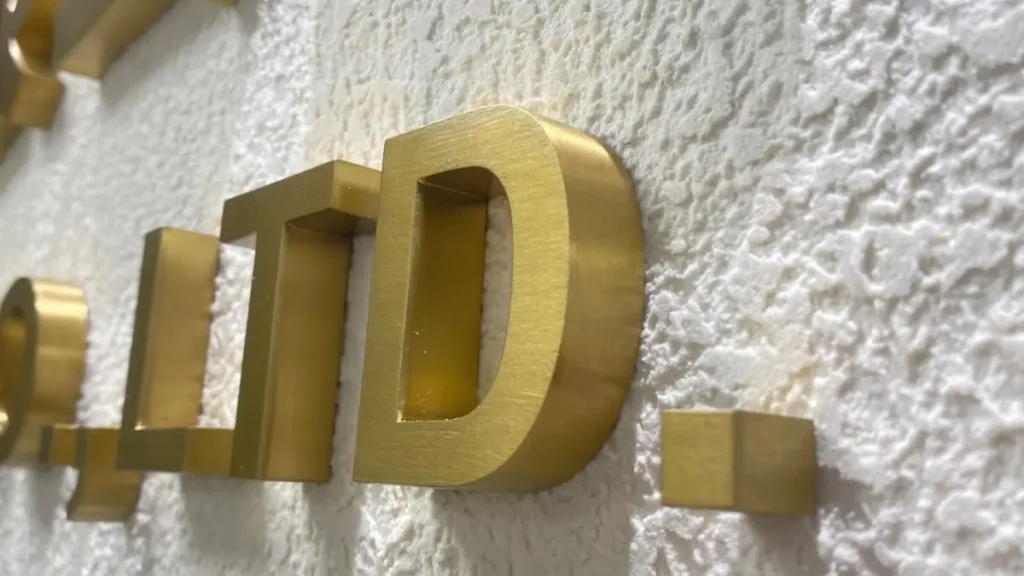
- Aluminum Building Signs: Designed for building facades, entrances, and exterior walls. These signs can incorporate dimensional lettering, custom finishes, and mounting systems to complement architectural styles and brand identities.
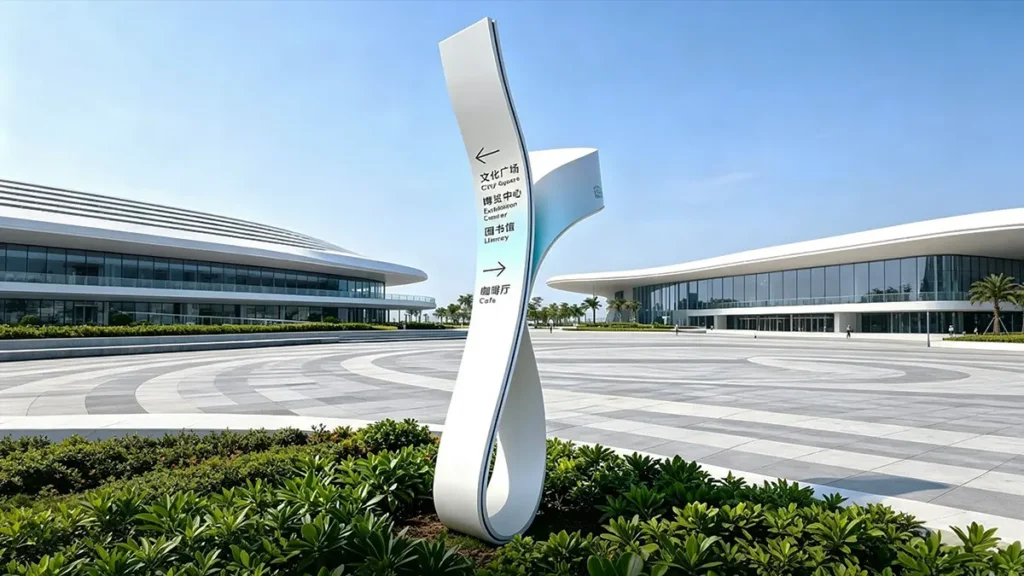
- Aluminum Wayfinding Signs: Used in commercial complexes, office buildings, hotels, and public spaces to provide directional information and improve navigation. They can be manufactured as wall-mounted panels, freestanding signs, or post-and-panel systems.
- Aluminum Plaques and Nameplates: Compact signs used for room identification, equipment labeling, facility information, and commemorative displays. They can feature engraved text, printed graphics, or anodized finishes.
The right type of aluminum sign depends on its intended application, visual requirements, installation method, and environmental conditions. For commercial projects, these factors should be considered together during the design and fabrication stages to achieve consistent appearance, functionality, and durability.

Aluminum Sign Materials and Thickness
The material and thickness of an aluminum sign directly affect its strength, weight, rigidity, and suitability for different applications. Solid aluminum sheets are commonly used for fabricated metal signs, while aluminum composite panels (ACM), consisting of two aluminum skins bonded to a core, are often selected for large-format signs that require a lightweight, flat surface. The choice depends on the sign’s size, design, installation method, and structural requirements.
Aluminum sign thickness varies according to the application, panel dimensions, and mounting conditions. Thinner panels may be suitable for small, flat signs, while larger signs, projecting signs, or those exposed to wind may require thicker material, reinforced edges, or additional structural support. Selecting the appropriate material and thickness during the design stage helps ensure the finished sign meets the project’s strength, appearance, and installation requirements.
When specifying aluminum alloys for signage, refer to established industry standards to verify alloy designations and material properties. The Aluminum Association’s standards resources provide reference information on aluminum alloys and product specifications.
Aluminum Sign Finishes and Printing
Common aluminum sign finishes include:
- Wet painting: Supports a wide range of colors and coating requirements.
- Anodizing: Creates a controlled oxide finish and can provide different metallic appearances.
- Brushed finishes: Produce a directional grain that is often used for architectural and premium signage.
- Digital printing: Allows detailed graphics, text, and brand colors to be applied to suitable sign surfaces.
For outdoor aluminum signs, finish selection should consider UV exposure, moisture, abrasion, color stability, and the substrate preparation required for reliable adhesion. For projects requiring anodized finishes, consider the alloy, surface preparation, appearance, and intended environment. The AAC guide to anodized aluminum finishes provides additional guidance for specifying these finishes.
4. How Are Aluminum Signs Manufactured?
The manufacturing process depends on the design, material, and finish, but custom aluminum signage generally follows several key stages.
- Design review and material selection: Drawings, dimensions, installation details, and project specifications are reviewed before production. Material and thickness are selected based on the design requirements.
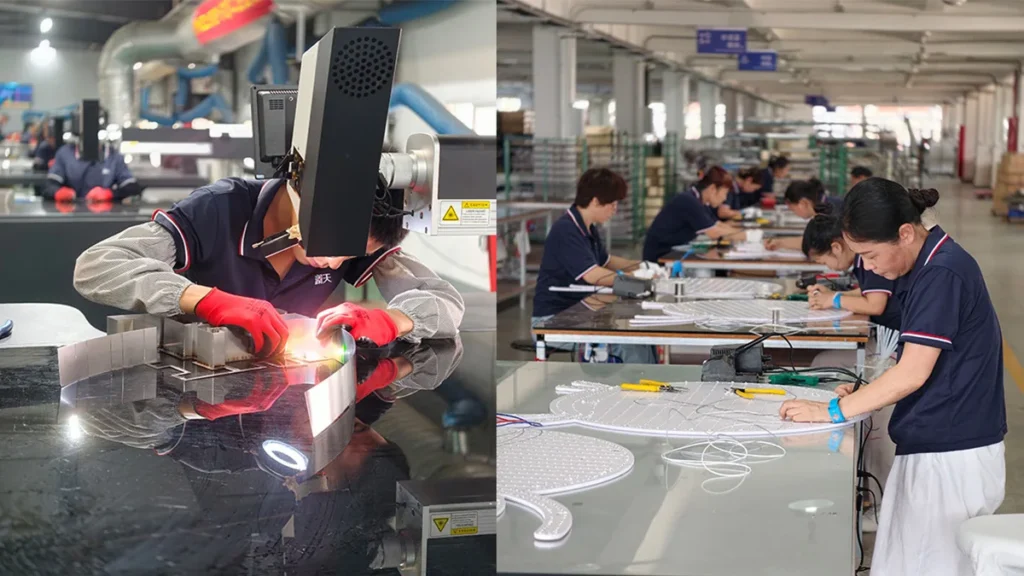
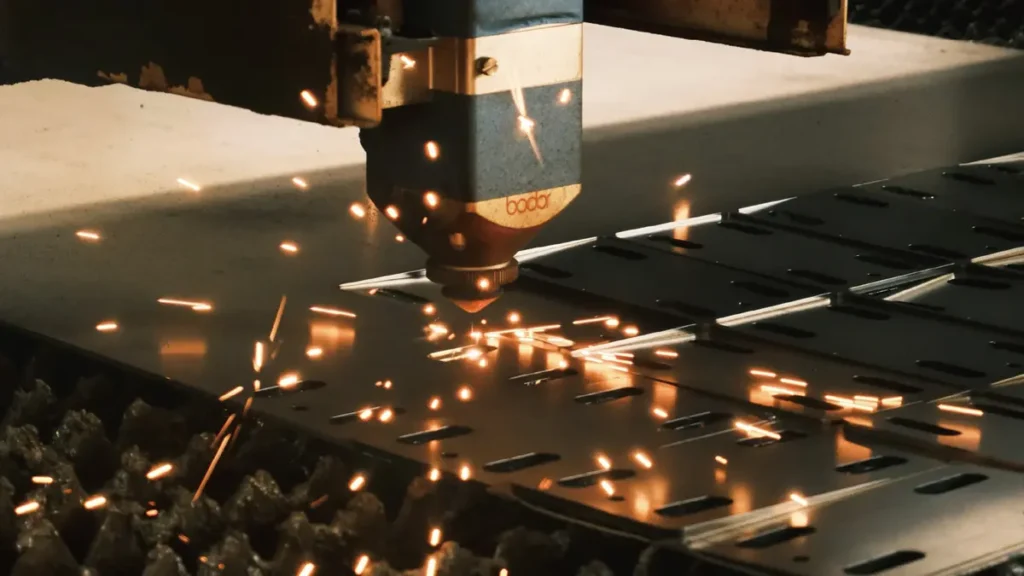
- Cutting and fabrication: CNC routing, laser cutting, drilling, bending, and other processes are used to create the required shapes and components.
- Welding and assembly: Where needed, components are welded, joined, or assembled with mounting structures and other hardware.
- Surface finishing and printing: Panels are prepared and finished through painting, anodizing, brushing, or printing, according to the approved specifications.
- Quality inspection and packaging: Finished signs are checked for dimensions, appearance, surface quality, and other project requirements. Protective packaging helps reduce the risk of damage during handling and transportation.
For projects involving multiple signs or locations, reviewing a production sample and confirming approved colors, dimensions, and finishes can help reduce inconsistencies during batch manufacturing. For more detailed information on aluminum alloy designations, material properties, and dimensional tolerances, consult the Aluminum Standards and Data 2024 reference.
5. How to Choose an Aluminum Sign Manufacturer
Choosing a manufacturer involves more than comparing quotations. Sign companies and project teams should assess whether a supplier can meet the project’s technical, quality, and delivery requirements.
Consider the following questions:
- Can the manufacturer handle custom designs? Check whether the supplier can review technical drawings, identify fabrication issues, and support design-for-manufacturing adjustments.
- How is production quality controlled? Ask how materials, dimensions, colors, surface finishes, and completed assemblies are inspected.
- Can the supplier maintain consistency across large orders? For chain stores or multi-location projects, confirm how approved samples, specifications, and production records are used to maintain consistency.
- How are signs prepared for shipping? Review packaging methods, surface protection, component separation, and export handling, especially for large or delicate signs.
A manufacturer with relevant fabrication experience, clear technical communication, documented inspection procedures, and suitable project coordination can help reduce production and delivery risks.
For international signage projects, early confirmation of drawings, materials, finishes, mounting details, and packaging requirements can also help prevent costly changes later in the process.
FAQ
1. What are aluminum signs made of?
Aluminum signs are commonly made from solid aluminum sheets or aluminum composite panels. The choice depends on the sign’s size, structure, weight requirements, finish, and application.
2. What thickness of aluminum is used for signs?
The required thickness depends on panel dimensions, mounting conditions, structural support, and environmental loads. Larger or more exposed signs may require thicker material, reinforcement, or a designed support structure.
3. Are aluminum signs suitable for outdoor use?
Yes. Aluminum signs are widely used outdoors. Their performance depends on material selection, surface treatment, installation, and exposure to moisture, sunlight, pollution, and other environmental conditions.
4. What is the difference between aluminum sheets and aluminum composite panels?
Solid aluminum sheets consist of a single metal layer, while ACM panels have two aluminum skins bonded to a core. Solid sheets are commonly used for fabricated metal signs, whereas ACM is often selected for lightweight, flat panels.
5. What finishes are available for custom aluminum signs?
Common options include powder coating, wet painting, anodizing, brushed finishes, and digital printing. The suitable finish depends on the desired appearance, environmental exposure, and project specifications.
6. How long do aluminum signs last outdoors?
There is no universal service life. Longevity depends on the aluminum specification, coating or finish, installation quality, local climate, exposure, and maintenance.