


Sign installation is the stage where a carefully designed and manufactured sign becomes part of a real commercial environment.
For a storefront, corporate building, retail location, or multi-site branding project, installation depends on much more than attaching a sign to a wall. Site conditions, sign dimensions, mounting methods, electrical requirements, access, and manufacturing accuracy all influence the final result.
A well-managed signage installation process connects three stages: project planning, manufacturing, and on-site installation. When these stages are coordinated properly, installation becomes more predictable, with fewer delays, adjustments, and unexpected problems.
This guide explains what happens before and during commercial sign installation, where common problems come from, and how a professional sign manufacturer can help make the process more efficient.
What Is the Sign Installation Process?
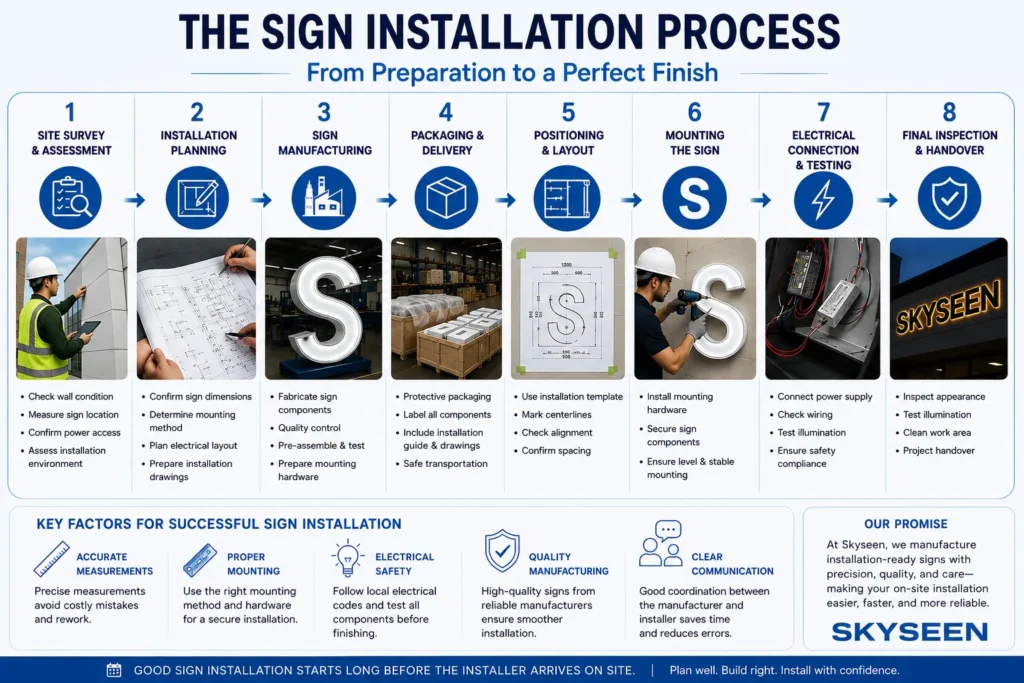
The sign installation process typically includes site assessment, installation planning, positioning, mounting, electrical connection for illuminated signs, testing, and final inspection. For commercial signage projects, successful installation also depends on accurate manufacturing, clear installation drawings, proper labeling, and coordination between the sign manufacturer and installation team.
What Should Be Prepared Before Sign Installation?
Good installation starts with preparation. Before a sign reaches the job site, the project team should understand the physical and technical conditions where it will be installed.
Site Survey and Installation Conditions
A site survey helps identify conditions that may affect the finished installation. Depending on the project, the team may need to review:
- Wall or mounting surface
- Installation height
- Available working space
- Building access
- Nearby architectural elements
- Outdoor exposure
- Existing electrical infrastructure
For exterior projects, weather exposure should also be considered. Rain, UV exposure, temperature changes, and the physical characteristics of the building can all influence material selection and mounting design.
Sign Dimensions and Structural Requirements
The size and weight of a sign influence how it should be supported. Before production, project teams should confirm:
- Overall dimensions
- Product weight
- Mounting points
- Brackets or hardware
- Wall conditions
- Required clearances
Dimensional accuracy matters even more for individual letters. When a storefront contains multiple letters or a large logo, a small positioning error can become obvious across the entire sign. This is one reason manufacturers should review mounting requirements before fabrication instead of leaving all installation decisions to the job site.
Electrical and Lighting Preparation
Illuminated signs require electrical planning before installation begins. For LED signage, the project should account for:
- Power supply location
- Cable routing
- Connection points
- Access for maintenance
- Lighting configuration
Electrical requirements vary by location. In the United States, the International Sign Association notes that electric signs are subject to applicable requirements including NEC Article 600 for installation and UL 48 for product safety. The exact code edition and local requirements can vary by jurisdiction.
The practical lesson is that electrical planning should happen during the design and engineering stage, not only when installers arrive.
How Is Commercial Sign Installation Carried Out?
Once the site and sign have been prepared, the project moves into the actual installation stage.
The exact method varies by sign type and building, but most commercial sign installation projects follow a logical sequence.
Positioning and Layout
The first step is confirming the exact installation position. Installers may use:
- Approved drawings
- Building centerlines
- Reference points
- Letter spacing
- Overall dimensions
For channel letters and other individually fabricated signs, accurate positioning is particularly important because every component contributes to the overall composition.
For projects involving channel letters, the final spacing and alignment should correspond with the approved artwork and manufacturing drawings. This is one area where close coordination between the manufacturer and installation team can save significant on-site adjustment.
Mounting the Sign
The mounting method depends on the sign design, dimensions, weight, and mounting surface. Common approaches include:
- Direct mounting
- Stud mounting
- Raceway mounting
- Bracket-supported mounting
The most important consideration is not simply choosing a mounting method, but ensuring that the sign is engineered around that method from the beginning. A well-prepared sign should arrive with clearly defined mounting points and sufficient installation information.
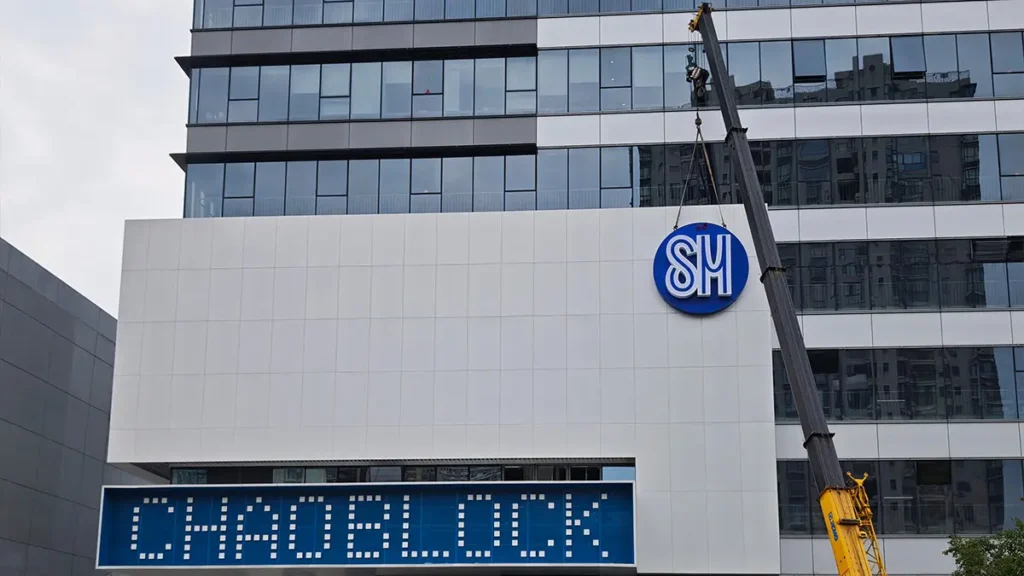
Electrical Connection and Lighting Test
For illuminated signage, the physical installation is followed by electrical connection and testing according to the project requirements. The installation team should verify:
- Connections are secure
- Power is available at the intended point
- LED systems operate correctly
- Illumination is consistent
- The completed sign matches the approved design
Lighting should also be evaluated in relation to the surrounding environment rather than simply maximizing brightness. The Illuminating Engineering Society maintains standards and recommended practices covering lighting applications, outdoor environments, and lighting measurement and testing.
Final Inspection
The final stage is a visual and functional inspection. Typical checks include:
- Alignment
- Surface appearance
- Lighting performance
- Structural stability
- Visible damage or gaps
- Site cleanliness
A successful signage installation should leave the finished sign secure, visually accurate, functional, and consistent with the approved design.
What Are the Most Common Challenges During Sign Installation?
Even experienced installation teams can encounter problems when project information is incomplete or site conditions differ from expectations.
Unexpected Site Conditions
Drawings cannot always reveal everything about a building. Installers may discover:
- Uneven wall surfaces
- Hidden structural elements
- Restricted access
- Unexpected obstructions
- Differences between drawings and the actual site
These conditions can force installers to modify mounting methods or reposition components. The earlier these issues are identified, the easier they are to manage.
Incorrect Dimensions or Mounting Points
One of the most frustrating problems during sign installation occurs when the manufactured product does not align with its intended installation location. Even relatively small errors can result in:
- Additional drilling
- Repositioning
- On-site modification
- Delayed installation
This is why engineering review, dimensional verification, and production quality control should be treated as part of the installation strategy.
Electrical or Lighting Problems
Illuminated signs can also experience problems related to:
- Cable routing
- Power availability
- Connections
- LED performance
When these problems are discovered only after a sign has been mounted, correcting them may require additional labor and site access.
How Can a Sign Manufacturer Make Installation Easier?
One of the most overlooked parts of sign installation is the manufacturer’s role before the product leaves the factory.
A professional manufacturer should not only produce a sign that looks right. The sign should also be engineered and manufactured to install correctly.
Engineering Before Production
Before fabrication begins, the manufacturer should review:
- Approved drawings
- Final dimensions
- Materials
- Mounting points
- Lighting requirements
- Installation conditions
Potential conflicts can often be identified and resolved at this stage, long before they become on-site problems.
Installation-Ready Manufacturing
For commercial signage, an important principle is: A sign should not only look right when it leaves the factory; it should also be ready for efficient installation when it reaches the job site.
That means installation considerations should influence manufacturing from the beginning.
Examples include:
- Clearly defined mounting points
- Appropriate cable exits
- Consistent component positioning
- Clear identification of separate pieces
- Installation-friendly packaging
This approach is particularly valuable for overseas sign companies that may have a different team handling installation locally.
Pre-Shipment Quality Control
Before shipment, a manufacturer can verify:
- Product dimensions
- LED lighting
- Electrical connections
- Surface and finish quality
- Component quantity and identification
The purpose is simple: reduce the number of issues the installation team needs to solve after delivery.
Packaging, Labeling and Documentation
For international projects, products may travel long distances before reaching the installation site. The final installation team may also have had no direct involvement in manufacturing. Clear packaging and documentation can therefore make a meaningful difference.
Useful documentation may include:
- Installation drawings
- Component labels
- Packing lists
- Assembly references
- Product identification
For large commercial projects, these details allow installers to quickly understand what each component is and where it belongs.
Sign Installation Checklist
Before installation:
- Confirm site conditions
- Verify final dimensions
- Review mounting points
- Confirm electrical access
- Review approved installation drawings
Before shipment:
- Test illumination
- Check dimensions
- Verify components
- Label separate parts
- Prepare installation documentation
At the job site:
- Confirm final positioning
- Secure the mounting system
- Complete electrical connections
- Test illumination
- Perform final inspection
The success of a sign installation project is usually the result of decisions made earlier:
Site Planning → Engineering → Manufacturing → Quality Control → Packaging → Installation
When dimensions, mounting details, electrical requirements, labeling, and quality checks are coordinated in advance, site work becomes more efficient and predictable.
At Skyseen, we believe the best signage is designed and manufactured with its final installation already in mind.
FAQ
1. What does the sign installation process involve?
The process generally includes site assessment, positioning, mounting, electrical connection for illuminated signs, testing, and final inspection. For larger projects, engineering, documentation, labeling, and pre-shipment testing are also important.
2. What should be checked before commercial sign installation?
Teams should confirm site conditions, final dimensions, mounting points, structural requirements, electrical access, and approved installation drawings.
3. Why does manufacturing affect signage installation?
Manufacturing accuracy affects dimensions, mounting points, component positioning, wiring, and overall product consistency. Poor preparation can lead to on-site modification and delays.
4. What are common problems during business sign installation?
Common problems include unexpected site conditions, incorrect dimensions, difficult access, mounting issues, electrical problems, and inconsistent components on multi-location projects.
5. How can a sign manufacturer support installers?
A manufacturer can provide engineering review, installation drawings, accurate fabrication, pre-shipment testing, component labeling, and protective packaging.