
Stainless steel signage is widely used for commercial buildings, offices, retail stores, hotels, hospitals, and architectural projects. Its combination of durability, corrosion resistance, clean appearance, and design flexibility makes it a popular choice for both indoor and outdoor signage.
But not all stainless steel signs are the same. The final performance and appearance depend on the stainless steel grade, sign construction, fabrication method, surface finish, and installation environment.
This guide explains what stainless steel signage is, why it is used, the main types available, and how different finishes can change the look and performance of a sign.
What Is Stainless Steel Signage?
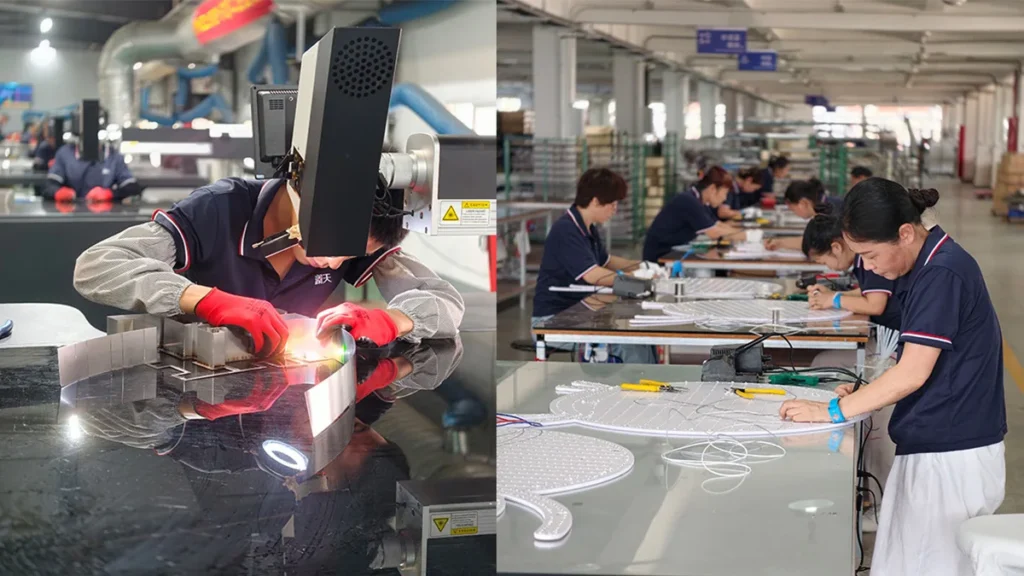
Stainless steel signage refers to signs, letters, logos, plaques, and other identification systems fabricated from stainless steel. Depending on the design, the material can be laser-cut, CNC-machined, bent, welded, polished, brushed, or coated to create different visual effects.
Common stainless steel signage applications include:
- Building and architectural signs
- Company logos and brand lettering
- Reception and lobby signs
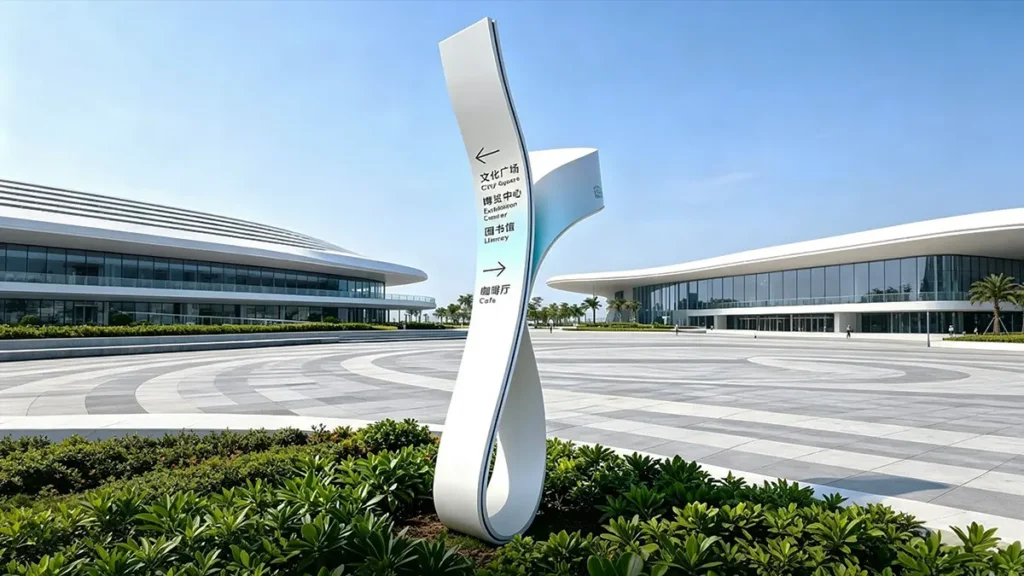
- Wayfinding and directional signs
- Door and room identification
- Stainless steel plaques
- 3D stainless steel letters
- Illuminated stainless steel signs
The choice of material and construction method depends on the installation environment, required appearance, sign size, and budget.
Why Choose Stainless Steel for Signage? 201 vs 304 Stainless Steel

Stainless steel is often selected when a sign needs a combination of strength, durability, corrosion resistance, and a premium appearance.
Compared with many other sign materials, stainless steel provides a strong architectural look and can be fabricated into both flat and three-dimensional designs.
Durability and Corrosion Resistance
Stainless steel is resistant to corrosion and can perform well in many commercial and outdoor environments. However, the level of corrosion resistance depends on the stainless steel grade and the surrounding conditions.
For demanding environments, material selection should be based on actual exposure rather than simply choosing the thickest or most expensive option.
Professional Appearance
Brushed, satin, mirror-polished, and PVD finishes allow stainless steel signage to match different architectural styles. A brushed finish can create a subtle corporate appearance, while polished or colored finishes can provide a more decorative effect. For industry-standard architectural signage design guidelines and material selection references, see Commercial Architectural Metal Signage Standards & Material Selection Guide on ArchDaily.
Fabrication Flexibility
Stainless steel can be cut into precise shapes and fabricated into letters, logos, plaques, panels, and custom 3D structures. It can also be combined with acrylic, LEDs, mounting studs, and other components.
201 Stainless Steel vs 304 Stainless Steel
For projects where stainless steel grade is an important consideration, 201 stainless steel and 304 stainless steel are two grades that may be evaluated.
201 stainless steel is generally a more cost-conscious option and can be suitable for certain indoor signage applications where environmental exposure is limited.
304 stainless steel offers better corrosion resistance and is widely used for commercial signage, architectural applications, and many outdoor projects.
The right choice depends on the installation environment, expected service conditions, required finish, and project budget. For exposed or demanding applications, the material specification should always be reviewed with the manufacturer rather than selected based only on price.
Types of Stainless Steel Signage
Stainless steel signage can be fabricated in many different forms depending on the purpose of the sign.
1. Stainless Steel Cut-Out Letters
Flat stainless steel letters can be laser-cut or CNC-cut from sheet material. They are commonly used for building names, corporate logos, reception areas, and wall-mounted branding.
The letters can be installed directly against a wall or mounted with spacers for a shadow-effect appearance.
2. 3D Stainless Steel Letters
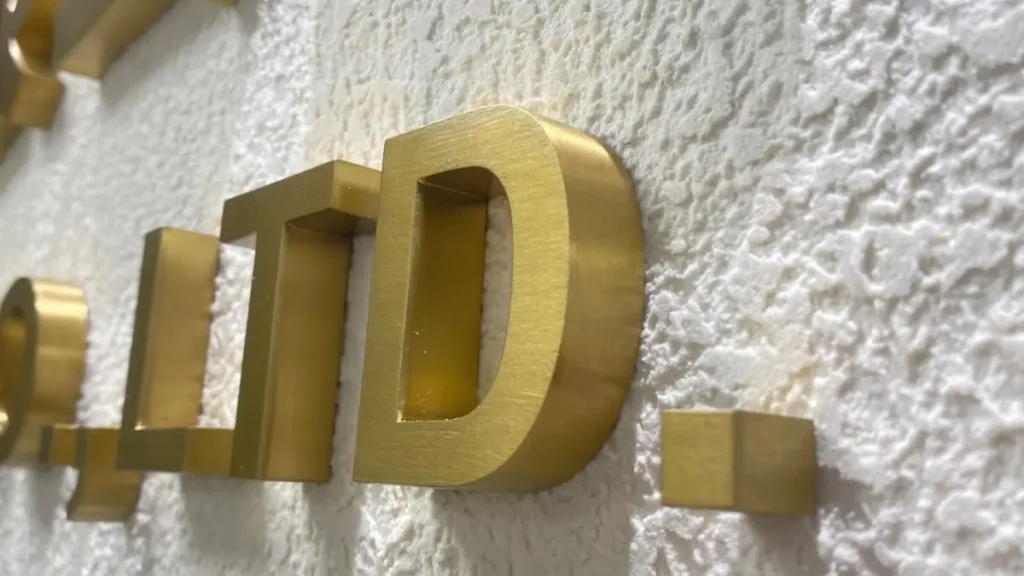
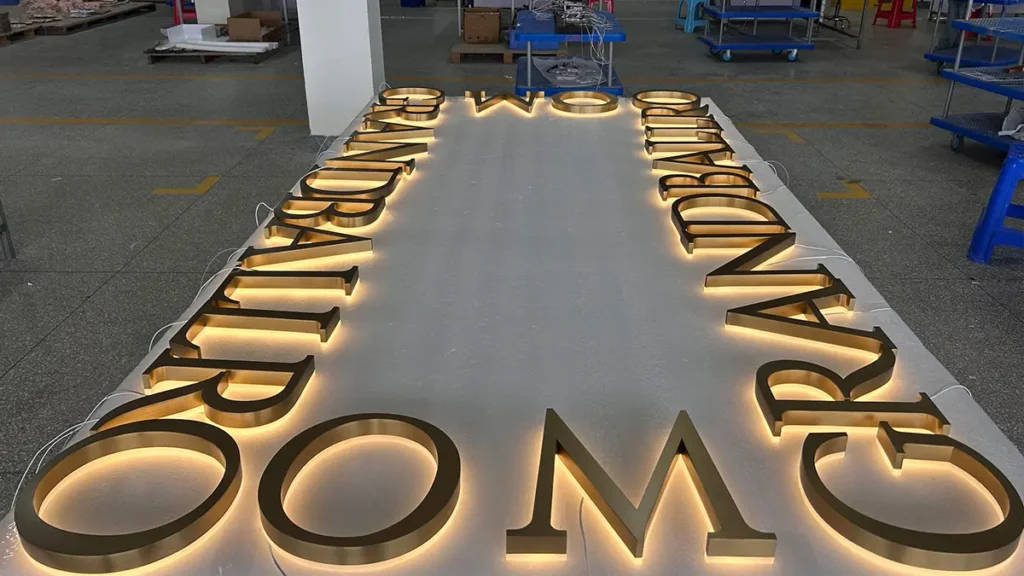
Fabricated stainless steel letters provide more depth than flat-cut letters. The sides can be bent and welded to create dimensional lettering for corporate and architectural applications.
These letters can also be combined with internal lighting or backlighting when illumination is required.
4. Stainless Steel Logo Signs
Custom stainless steel logos are often used where brand appearance is especially important. The logo can be cut, fabricated, brushed, polished, or PVD-coated to create a specific brand finish.
5. Stainless Steel Plaques
Stainless steel plaques are commonly used for building identification, room signs, memorials, company information, and directional applications.
They can include engraved, etched, printed, or raised graphics depending on the design requirements.
6. Illuminated Stainless Steel Signs
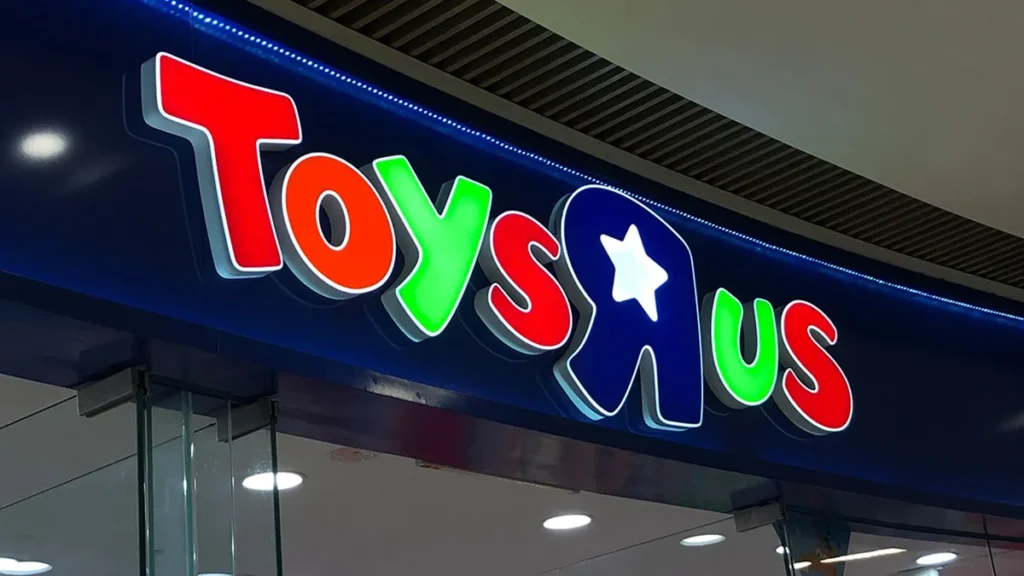
Stainless steel can also be used as part of illuminated signage. LED lighting can be integrated into fabricated letters or combined with acrylic components to create front-lit or halo-lit effects.
Stainless Steel Signage Finishes
The surface finish has a major impact on the final appearance of stainless steel signage.
1. Painting Finish
Painting finish applies customized liquid paint layers to the stainless steel surface, delivering unlimited color options and solid, uniform color coverage that breaks the inherent metallic tone of stainless steel. It is ideal for brand-focused commercial signs, colorful decorative signage, and project-specific custom architectural signage that requires precise color matching.
This finishing process can cover minor surface imperfections and provide an extra protective layer against dust and slight oxidation. For optimal durability, spray painted stainless steel signs are more recommended for indoor and sheltered outdoor environments to avoid long-term exposure to extreme weather.
2. Brushed Stainless Steel
Brushed stainless steel has a directional grain created by mechanical finishing. It offers a modern, understated appearance and is widely used for corporate signs, architectural lettering, and interior signage.
Because the grain has a direction, consistent brushing is especially important when producing multiple letters or panels.
3. Mirror Polished Stainless Steel
Mirror polishing creates a highly reflective surface that can deliver a premium appearance. It is often used for luxury interiors, decorative signs, high-end retail, and architectural branding.
However, polished surfaces can show fingerprints, scratches, and surface contamination more easily, so handling and maintenance should be considered.
4. PVD Stainless Steel
PVD coating can add colors such as gold, black, bronze, champagne, or other custom tones while maintaining the visual characteristics of stainless steel.
PVD stainless steel signage is often selected for hotels, luxury retail, premium commercial spaces, and architectural projects where branding and color consistency are important.
5. Matte or Bead-Blasted Finish
A matte or bead-blasted finish produces a low-reflective surface with a more industrial and contemporary appearance. It can be useful when designers want to minimize glare or create a distinctive architectural texture.
The best finish depends on the desired appearance, lighting conditions, installation environment, and maintenance requirements.
Stainless steel signage offers a strong combination of durability, design flexibility, and premium appearance. From simple stainless steel plaques to fabricated 3D letters and illuminated logos, it can be customized for a wide range of commercial and architectural applications.
When specifying stainless steel signage, consider four key factors: stainless steel grade, sign construction, surface finish, and installation environment. Choosing these elements together helps ensure that the finished sign not only looks right but also performs well throughout its service life.
FAQ
1. What is the difference between 201 stainless steel and 304 stainless steel signage?
201 stainless steel signage is cost-effective, suitable for indoor environments with less environmental exposure and low corrosion risk. 304 stainless steel features superior corrosion and rust resistance, ideal for outdoor spaces, high-end commercial buildings, hotels and long-term exposed architectural projects. It is the preferred grade for durable, long-lasting signage applications.
2.What are the advantages of stainless steel signage over other sign materials?
Stainless steel signage boasts outstanding durability and anti-corrosion performance, supporting long-term service life with low maintenance costs. It features flexible fabrication, customizable flat/3D shapes and various surface finishes to match diverse architectural styles. Meanwhile, it presents a high-end, clean and premium metal texture, far more textured and wear-resistant than acrylic, aliminum and ACM signs.
3. Can stainless steel signage be customized with complex brand logos and non-standard sizes?
Yes, stainless steel signage supports a high degree of customization. Through laser cutting, CNC machining, precision bending and welding, it can be fabricated into intricate brand logos, custom typography, irregular shapes and bespoke dimensions to match exact brand identity guidelines.
It can also be integrated with acrylic panels, LED modules and mounting hardware to create custom 3D or illuminated effects. Whether for small room identification plaques or large facade building lettering, manufacturers can adjust material thickness, size and construction to fit project-specific requirements.
4. How much does stainless steel signage cost, and what factors impact the pricing?
Pricing for stainless steel signage ranges widely based on material specification, design complexity, surface finish, size, and optional features. Basic flat laser-cut 201 stainless steel letters for indoor use represent the entry-level price point, while custom 3D fabricated 304 stainless steel signs with premium finishes or integrated LED lighting sit at the higher end of the budget spectrum.