
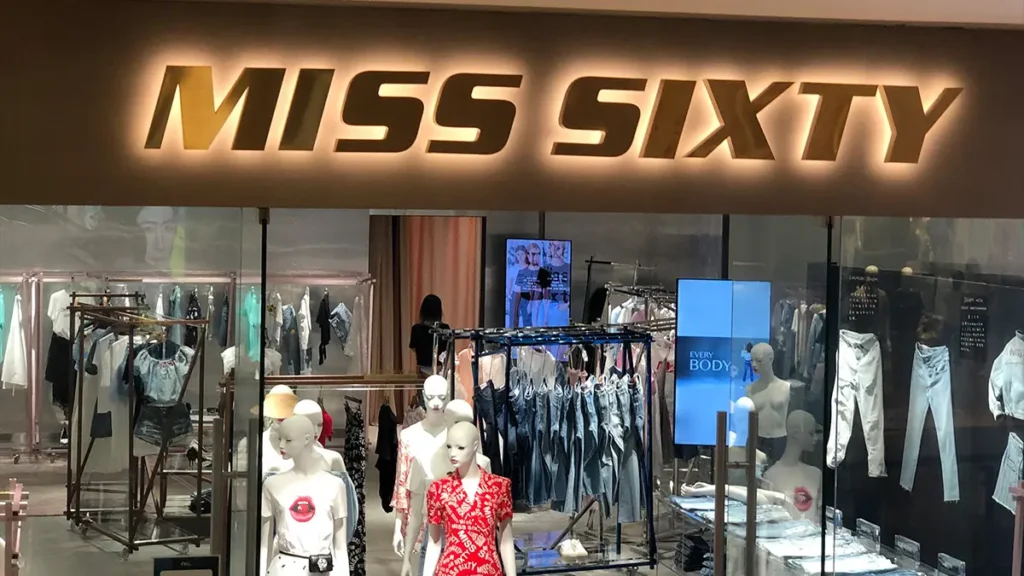
Halo lit channel letters are three-dimensional illuminated letters that direct light toward the mounting surface behind them, creating a glow around the letter outlines. Also known as reverse-lit channel letters, they are commonly specified for corporate buildings, hotels, retail environments, and architectural branding where the appearance of the solid letter matters as much as the lighting effect.
For sign companies and project managers, achieving a consistent halo involves more than selecting LED modules. Letter depth, rear construction, mounting clearance, wall finish, and installation conditions all influence the final result. Understanding these factors before production helps reduce design revisions, uneven illumination, installation problems, and unnecessary costs. This guide explains how halo-lit letters work, how they compare with front-lit designs, and what to confirm before requesting a manufacturing quotation.
1. What Are Halo-Lit Channel Letters?
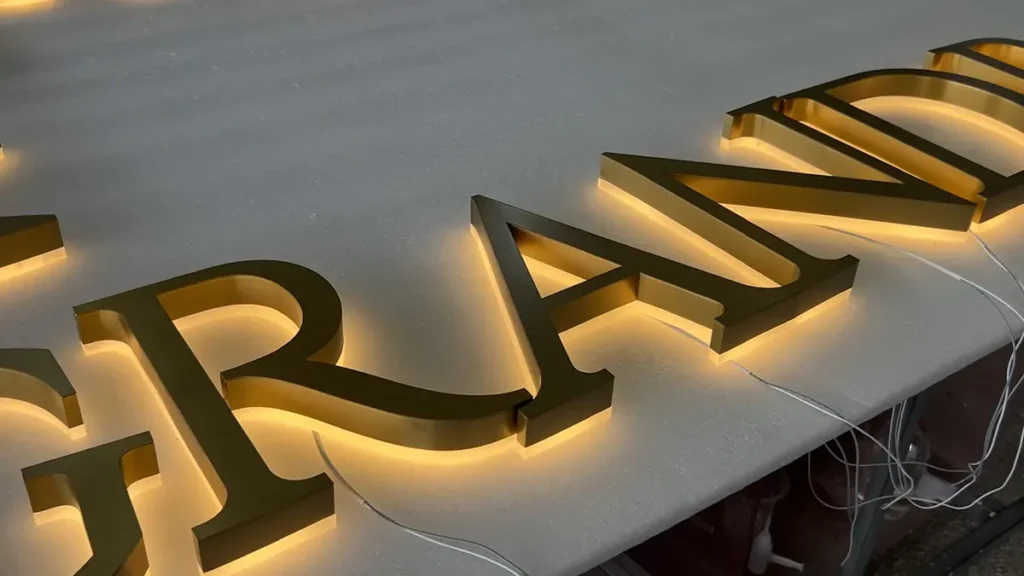
Halo-lit channel letters are individually fabricated three-dimensional letters with an opaque front and an internal lighting system that directs light backward toward the wall or other mounting surface.
Unlike front-lit letters, which emit light through a translucent face, halo-lit letters use reflected light to create a luminous outline around the solid letterform. The letter itself remains visually defined, while the surrounding surface becomes part of the lighting effect.
A typical construction includes:
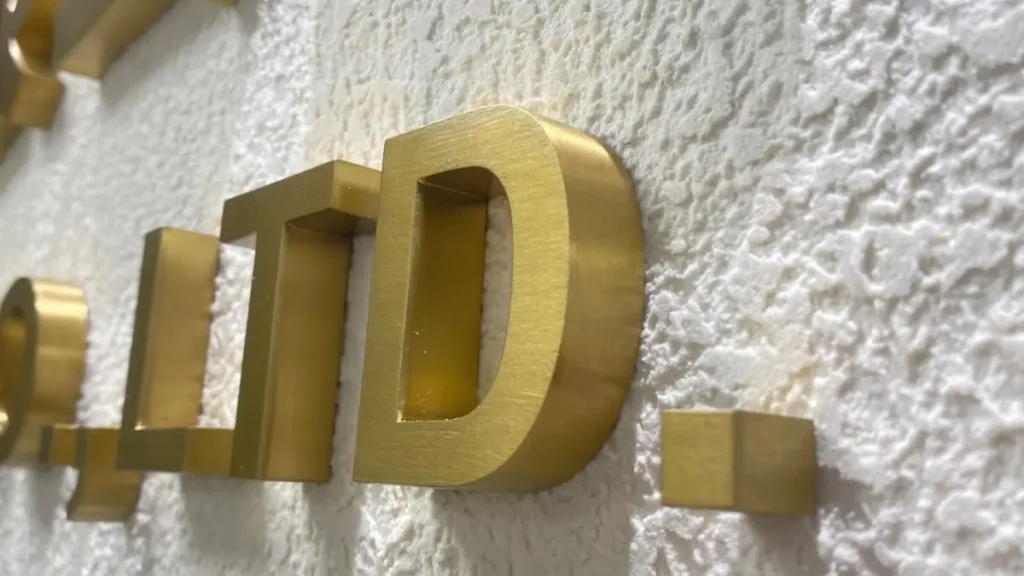
- Front face: Often fabricated from aluminum or stainless steel, with an opaque finish.
- Side returns: Form the three-dimensional letter body and provide space for internal components.
- LED modules: Positioned to direct light toward the rear or mounting surface.
- Rear panel or opening: Designed to support the lighting arrangement and protect internal components as required by the construction.
- Standoffs or mounting hardware: Hold the letter away from the wall to establish the required lighting clearance.
- Wiring and power supply: Deliver electrical power according to the approved design.
The exact construction varies with letter size, material, lighting requirements, mounting method, and whether the sign is intended for indoor or outdoor use.
Are halo-lit and reverse channel letters the same?
In common sign-industry usage, halo-lit, reverse-lit, and reverse channel letters often describe the same basic lighting effect: light is directed behind the letter rather than through its front face. Terminology can vary between suppliers, so procurement documents should specify the required lighting direction and construction instead of relying on the product name alone.
For a broader overview of available configurations, see SKYSEEN’s guide to custom channel letters.
2. Why Choose Halo-Lit Channel Letters?
Halo-lit letters are most useful when the project calls for dimensional lettering with a controlled glow rather than a brightly illuminated face. Their practical value depends on the architecture, viewing conditions, and project requirements.
Architectural appearance and brand presentation
The solid face remains visible during daylight, while the halo adds depth after dark. This makes the configuration suitable for corporate logos, hotel signage, reception areas, and premium retail environments where the sign needs to complement the building rather than dominate it with a bright face.
The front finish can also be coordinated with a brand’s visual identity. Brushed metal, painted aluminum, and selected stainless steel finishes can produce different daytime appearances while supporting the intended nighttime effect.
A comparison of lighting configurations
| Factor | Halo-lit / reverse-lit | Front-lit |
|---|---|---|
| Light direction | Toward the mounting surface | Through the letter face |
| Main visual effect | Glow around the letter | Illuminated letter face |
| Typical face construction | Opaque metal or another specified opaque material | Translucent face material |
| Wall dependence | High; wall finish affects the halo | Generally lower |
| Key design consideration | Rear clearance and reflected-light uniformity | Face diffusion and internal light distribution |
| Common applications | Architectural branding, hotels, corporate signage | Storefronts, retail signs, general commercial signage |
Neither configuration is universally better. The right choice depends on the required visibility, brand appearance, façade conditions, budget, and installation requirements.
3. Key Design and Material Factors
A halo-lit sign can look excellent in a rendering but produce an uneven glow after installation if the wall, letter geometry, or mounting details have not been considered together.
The following factors should be resolved during engineering and design review.
3.1 Letter dimensions and stroke width
Letter height is only one part of the specification. Stroke width, internal openings, corners, and overall letter depth also affect the available space for LED modules and wiring.
Thin strokes and small counters can limit component placement. If the LED layout is copied from a larger letter without accounting for geometry, some areas may appear brighter than others.
The production drawing should identify overall dimensions, return depth, mounting points, and any areas that require special attention.
3.2 Letter depth and wall clearance
Letter depth determines the space available for internal components, while the distance between the letter and the wall affects how the halo spreads.
A smaller wall clearance can produce a tighter glow. A larger clearance may spread the light over a wider area, but it does not automatically create a better result. The final effect depends on LED direction, output, letter geometry, and the reflective properties of the mounting surface.
3.3 Metal selection and surface finish
Aluminum is widely used where low weight and fabrication flexibility are important. Stainless steel may be specified when the project calls for a particular metallic appearance, finish, or material performance.
The appropriate choice depends on the environment and design requirements.
- Aluminum: Useful for fabricated letter bodies and painted finishes; alloy, thickness, and coating should match the application.
- Stainless steel: Can support brushed or polished finishes, but grade and finish should be selected with the installation environment in mind.
- Protective coatings: Need to be compatible with the substrate, exposure conditions, and required appearance.
For exterior installations, consider coastal salt exposure, industrial pollution, moisture retention, and maintenance access before finalizing the material specification.
3.4 LED layout and light distribution
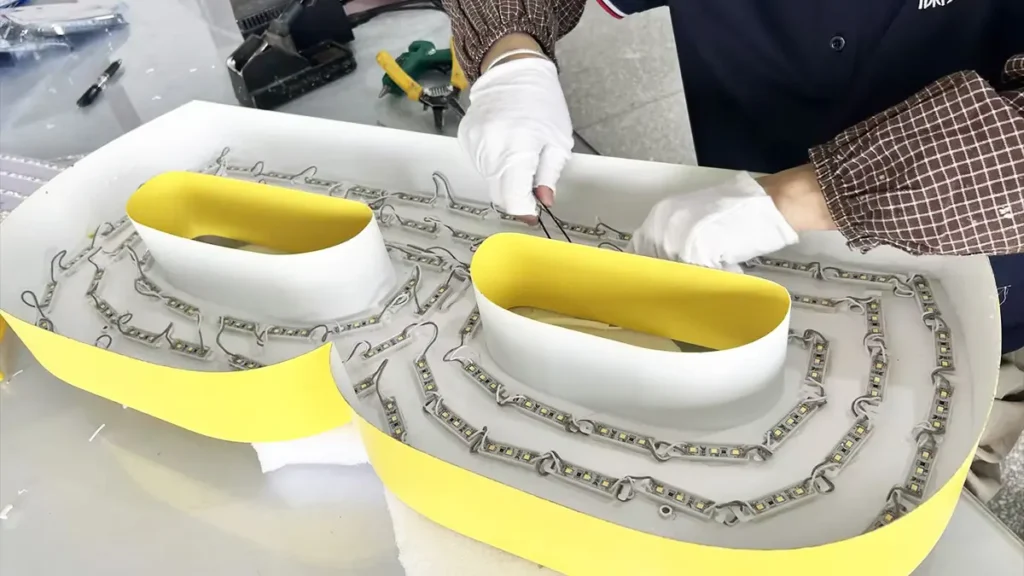
LED placement should be designed around the actual letter geometry rather than treated as a uniform spacing exercise.
The objective is a controlled, consistent halo without obvious bright spots or dark gaps. A representative test letter is particularly useful for logos with thin strokes, unusual shapes, or demanding finish requirements.
3.5 Wall color, texture, and installation conditions
The wall is part of the optical system. A smooth, light-colored surface may reflect light differently from dark stone, textured concrete, ribbed metal, or a wall with deep joints.
Before production, confirm:
- Wall material, color, and texture.
- Required clearance behind the letters.
- Mounting substrate and attachment points.
- Cable routes and power supply location.
- Weather exposure and access for future maintenance.
For projects where wall conditions are uncertain, photographs alone may not be sufficient. A site survey or physical mock-up can help verify the design before the full order is released.
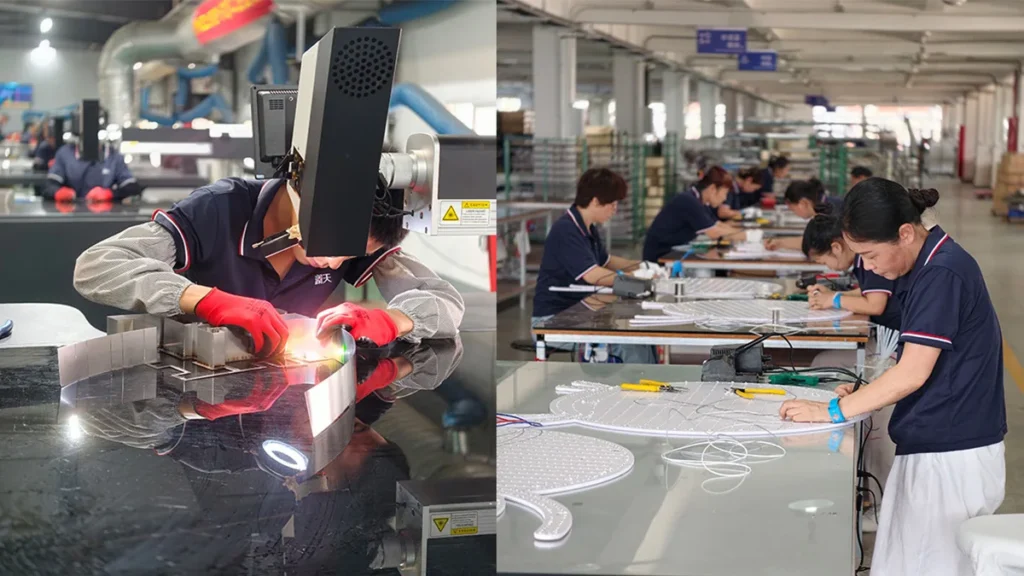
4. Halo-Lit Channel Letter Fabrication Process
A reliable fabrication process connects the approved artwork, engineering details, component preparation, assembly, testing, and packaging. Each stage needs to reflect the intended lighting effect and installation conditions.
Typical manufacturing workflow
- Artwork and specification reviewCheck vector artwork, dimensions, font details, material and finish requirements, illumination direction, and mounting information. Resolve unclear details before production.
- Engineering and component preparationPrepare production drawings and determine the letter construction, return depth, rear configuration, LED layout, wiring provisions, and mounting details.
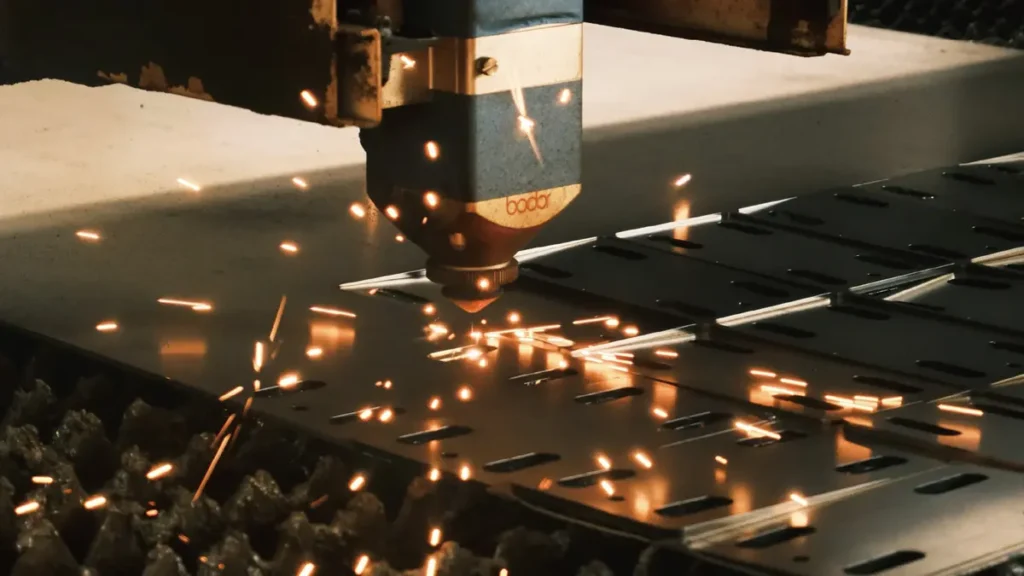
- Cutting and metal fabricationCut the required components, form the returns, and assemble the letter bodies using the process appropriate to the approved material and design.
- Surface finishingComplete the specified preparation, coating, painting, brushing, or polishing process. Finish requirements should be documented clearly, particularly for multi-location orders.
- LED installation and assemblyInstall the lighting components and wiring according to the approved layout. Check component placement, connections, access, and the intended direction of illumination.
- Inspection, lighting test, and packagingVerify dimensions, finish, assembly, electrical operation, and halo appearance as applicable to the approved inspection plan. Protect finished faces, edges, mounting hardware, and electrical components during transport.
What should be checked before shipment?
A practical inspection plan can include:
- Dimensions and consistency with approved drawings.
- Surface finish, color, and visible workmanship.
- LED operation, color consistency, and overall light distribution.
- Wiring, connections, and power supply configuration.
- Mounting hardware and installation documentation.
- Product identification, packing protection, and shipment quantities.
Inspection requirements should be agreed upon before production, especially when the order covers multiple stores or phased project deliveries.
For sign companies outsourcing fabrication, SKYSEEN’s guide to channel letter fabrication for sign companies explains the information to prepare and the production coordination issues to address before placing an order.
Electrical and regulatory considerations
Electrical signs must be designed and installed according to the requirements applicable to the destination market and project. For US projects, UL 48 is an important reference for electric sign safety, and local authorities may impose additional requirements.
See UL Solutions’ electric sign certification information for background on sign certification. Do not assume that a particular component, sign construction, or finished product is certified simply because it uses LED modules or a listed power supply. Confirm the applicable requirements for the complete sign and installation.
5. Cost Factors
How much do halo-lit channel letters cost?
There is no reliable universal price for halo-lit channel letters. The quotation depends on the letter construction, material, dimensions, finish, lighting specification, order quantity, and project requirements.
The main cost factors are:
- Size and geometry: Larger letters require more material, while complex logos and narrow strokes can increase fabrication and assembly time.
- Material and finish: Stainless steel, specialized coatings, polished surfaces, and custom colors may change material and finishing costs.
- Lighting components: LED type, output, color, wiring, and power supply requirements affect the electrical specification.
- Mounting method: Individual studs, mounting templates, raceways, backer panels, and site-specific hardware have different engineering and production implications.
- Testing and quality requirements: Samples, documented inspections, and additional approval stages may affect the project budget and schedule.
- Packaging and logistics: Protective packaging, shipment dimensions, destination, and delivery arrangements influence the landed cost.
When requesting a quotation, provide the vector logo, letter dimensions, material and finish preferences, lighting requirements, installation location, quantity, and required delivery schedule. If some details are not finalized, identify them as open items so the manufacturer can clarify the assumptions behind the quotation.
For projects that also require material selection for other exterior sign components, see SKYSEEN’s guide to outdoor sign materials.
FAQ
1. What is the difference between halo-lit and reverse channel letters?
The terms are commonly used for the same basic configuration: dimensional letters that direct light toward the mounting surface to create a glow around the letter outlines. Because terminology varies by supplier, confirm the actual construction, lighting direction, rear panel arrangement, and mounting clearance in the approved drawings before ordering.
2. How do halo-lit channel letters work?
LED modules inside each letter direct light toward the wall behind it. The mounting surface reflects that light, creating a halo around the solid letterform. The final appearance depends on LED placement, letter depth, wall clearance, wall color and texture, and the geometry of each character.
3. Are halo-lit channel letters suitable for outdoor use?
They can be used outdoors when the materials, coatings, electrical components, enclosure details, and mounting system are selected for the installation environment. The design should account for moisture, temperature changes, corrosion exposure, wind loads where applicable, and access for maintenance. Local electrical and sign regulations must also be confirmed.
4. What affects the cost of halo-lit channel letters?
Cost is influenced by letter size, logo complexity, material, finish, LED specification, mounting hardware, quantity, inspection requirements, and shipping. Unusual lettering and custom finishes may require additional engineering or production work. A meaningful quotation requires the artwork, dimensions, finish, lighting details, installation location, quantity, and delivery requirements.
5. How can sign companies achieve a consistent halo effect?
Start by reviewing the actual letter geometry, LED layout, rear clearance, and wall conditions. For demanding designs, test a representative letter or mock-up before full production. During inspection, compare the assembled letters under consistent test conditions and verify that the approved appearance, dimensions, finish, and lighting configuration are maintained.
6. What information should I provide when requesting a quotation?
Provide vector artwork, overall dimensions, letter height and depth requirements, material and finish preferences, halo color, mounting method, installation location, quantity, and delivery schedule. Include wall photos or drawings when available. Clearly identify any unresolved requirements so the manufacturer can flag engineering decisions and state quotation assumptions before production begins.